Your Partner for reliable greenfuel brokerage
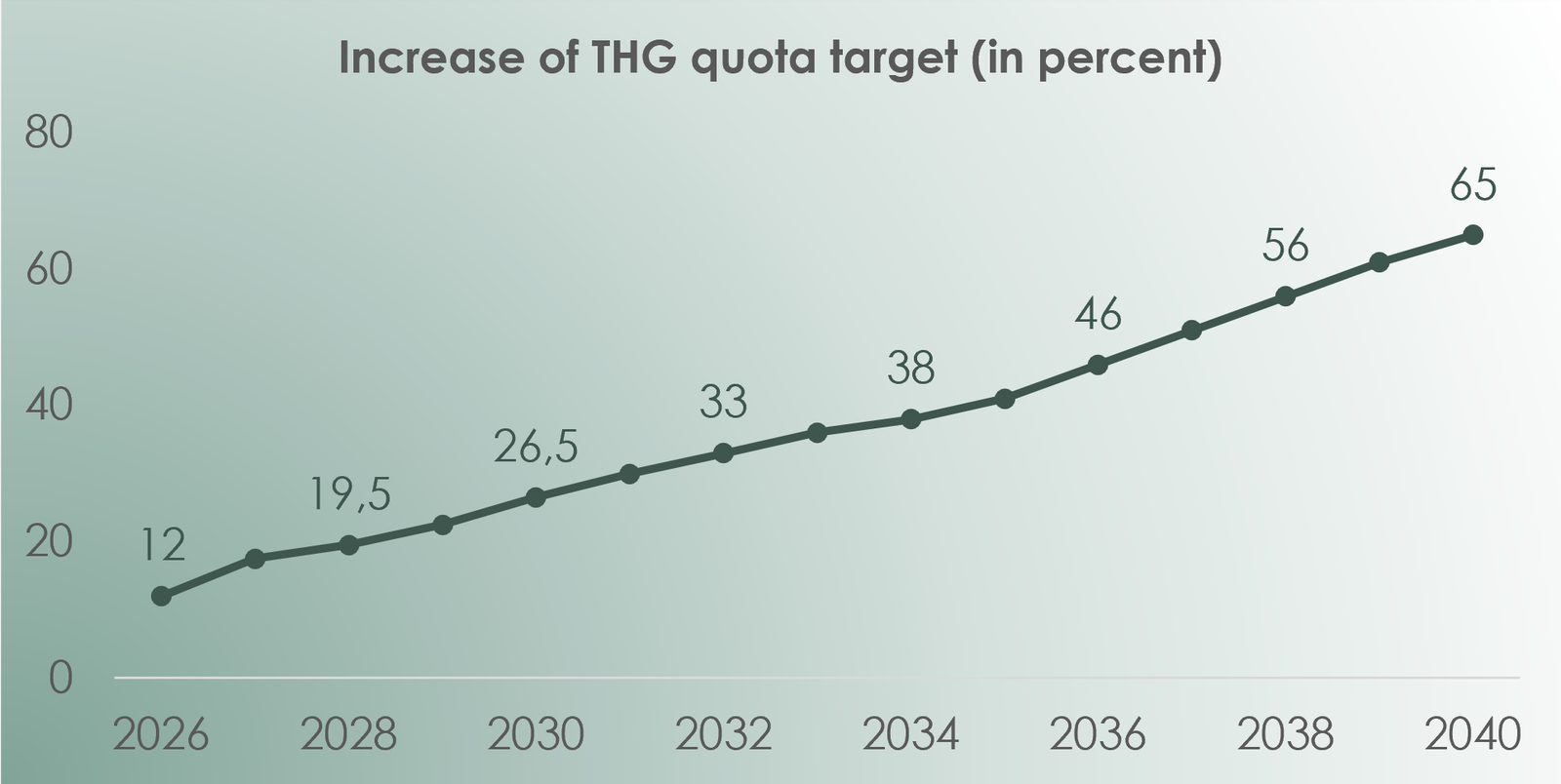
The greenhouse gas reduction quota (THG quota) obliges companies that place fossil fuels (especially diesel and gasoline) on the market to reduce their CO₂ emissions associated with their sales by a specified percentage each year. Following the implementation of RED III, this percentage is set to increase gradually from 10.6% in 2025 to 59% in 2040.
In order to fulfill this obligation, companies can either use climate-friendly or lower-CO₂ energy sources such as biofuels, electricity for electric vehicles, hydrogen, or advanced fuels. Alternatively, companies subject to quotas can offset their emissions obligations by purchasing so-called THG quotas. THG quotas can be generated by third parties by placing these low-emission fuels on the market. With the following compliance options, distributors can generate THG quotas that can be used by companies subject to quotas:
This enables petroleum companies to purchase THG quotas in order to fulfill their legal obligations without necessarily having to substitute fossil fuels themselves.
Key changes:
In order to implement RED III and achieve climate protection targets in the transport sector, the THG quota will be ambitiously updated. The following measures will thus be taken:
Implications for fulfillment options:
E-Mobility: Electricity-based mobility (charging power) is consolidating its position as a key fulfillment lever. While biofuels are becoming less attractive due to the elimination of multipliers, charging electricity (through multi-counting to account for efficiency gains) remains an instrument for cost-effective quota fulfillment.
Biogenic fuels The most significant change is the increase in the sub-quota for advanced biofuels and the simultaneous elimination of double counting. In order to generate the same quota amounts as before, companies must now place twice the physical amount of advanced fuels on the market.
The complete end of the eligibility of palm oil residues eliminates a previously significant but ecologically controversial option. This forces players to switch to domestic raw materials or waste-based oils (UCO), which intensifies competition in this segment.
RFNBOs and hydrogen: The introduction of a separate quota for renewable fuels of non-biological origin (RFNBOs) will force the market to ramp up green hydrogen and e-fuels. The previous voluntary approach will be replaced by an obligation, which will greatly increase planning security for electrolysis projects.
Conclusion:
The legal anchoring of this ambitious path until 2040 creates the necessary long-term planning security for capital-intensive investments in renewable production facilities and charging infrastructures. As a result of the shortage of supply, considerable price pressure can already be observed on the THG quota market.
The introduction of mandatory on-site government inspections for fuels from third countries and the ban on crediting palm oil residues are a direct response to regulatory loopholes in the past. For companies subject to quotas, this means an increased compliance risk: only fully verifiable physical quantities will be allowed onto the market. This “clean-up” of the portfolio means that previous volume drivers are being eliminated and must be replaced by higher-quality but often more expensive alternatives. In terms of fulfillment options, the playing field is shifting in favor of electrification and waste- and electricity-based fuels.
Biofuels from residual and waste materials play a central role here, with their strategic importance legislated by a dedicated sub-quota. This sub-quota guarantees the use of advanced fuels that are considered particularly climate-neutral. Despite the elimination of flat-rate double counting, these waste-based energy sources remain indispensable for physically implementing the reduction commitments in the existing fleet. The new, binding quota for RFNBOs creates the necessary investment security for the ramp-up of the hydrogen economy. At the same time, multiple crediting for electricity remains a crucial instrument for keeping the rising quota obligations economically viable. Access to direct production capacities in the field of advanced biofuels and RFNBOs is becoming a critical competitive advantage in meeting the rapidly increasing reduction obligations in a tightly controlled market environment.
Are you interested in further information on this topic? Please feel free to contact us. We look forward to talking to you!
Contact us to download the publication
greenfuelpartners GmbH
Tal 44
80331 Munich
Germany
Phone: +49 89 2096 9097
Mail: info@greenfuelpartners.com